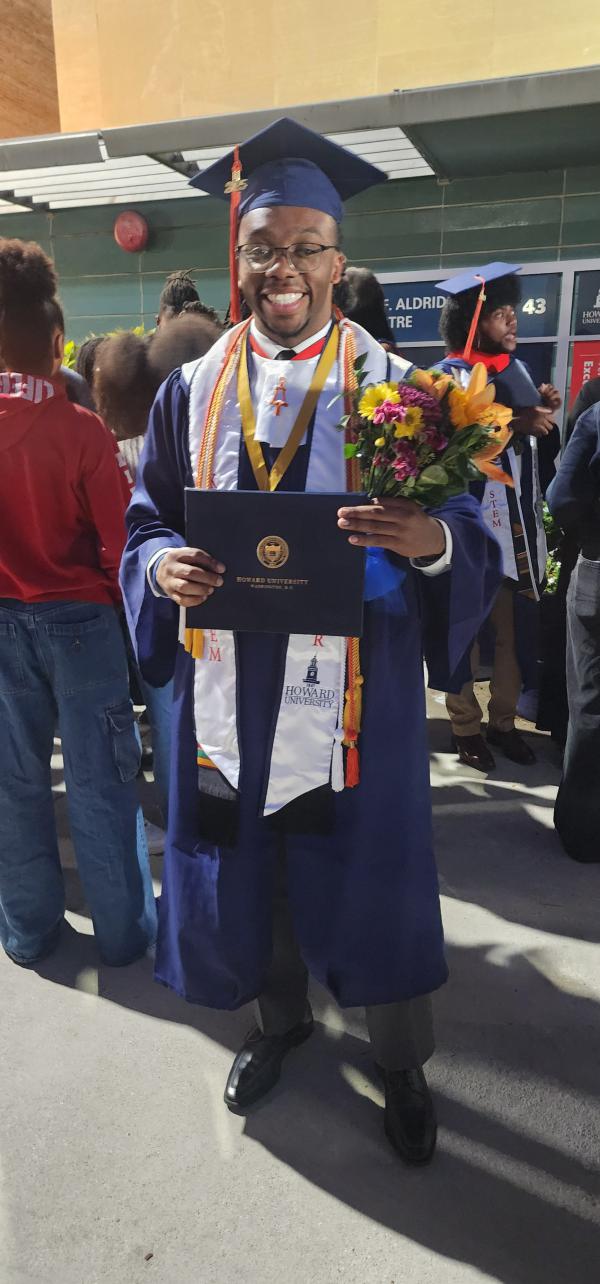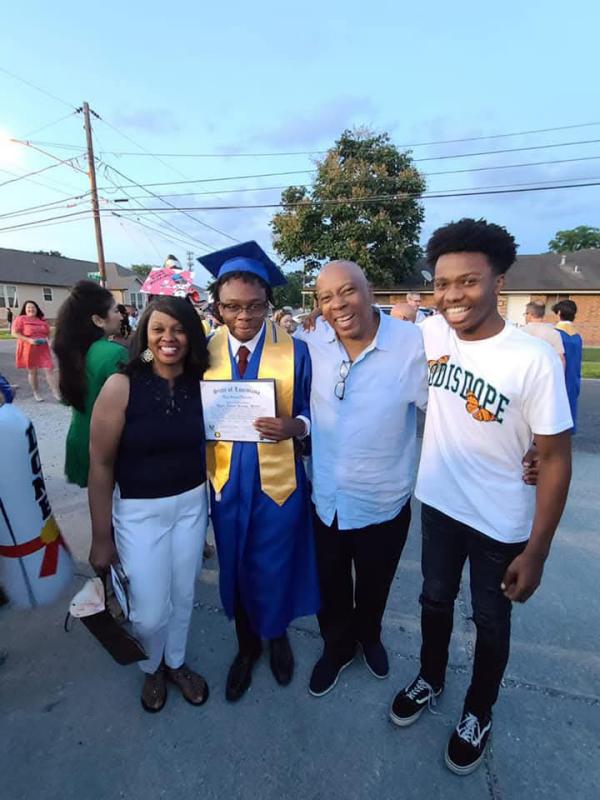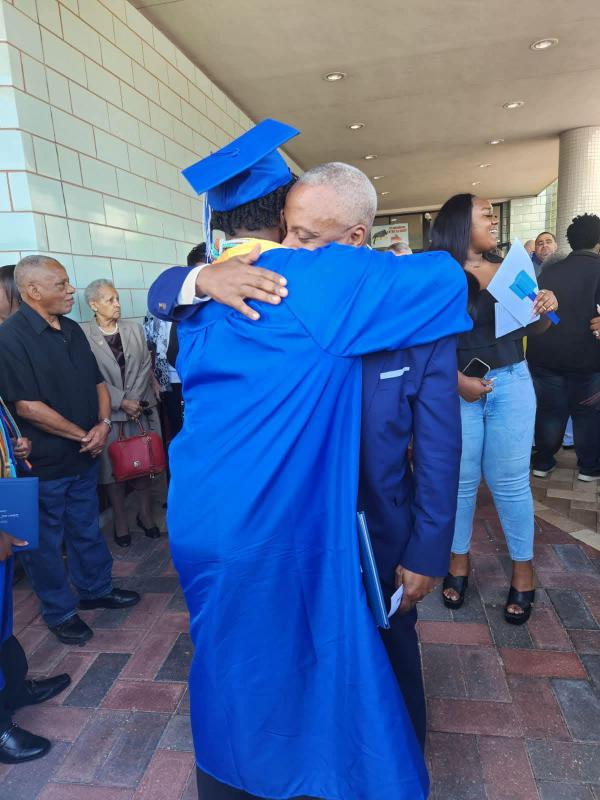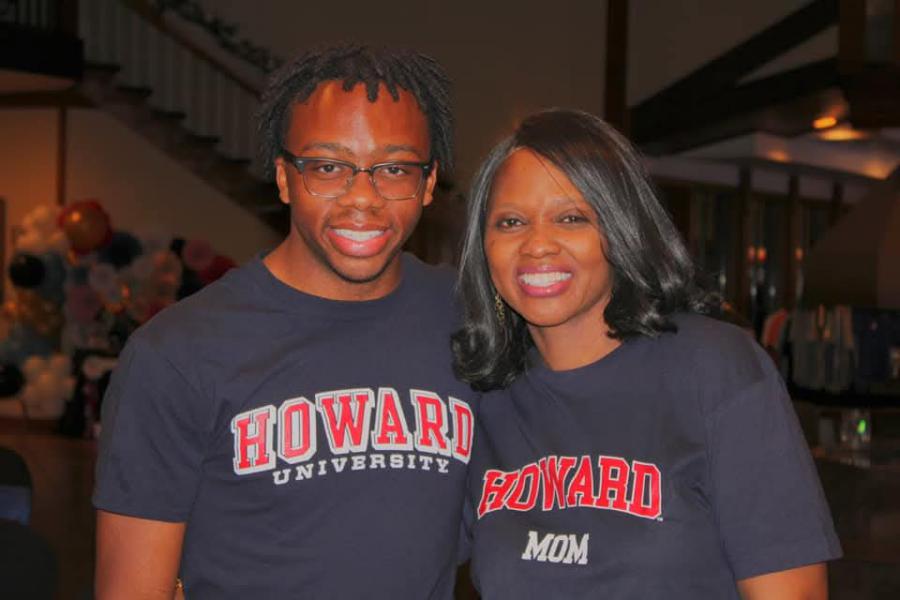
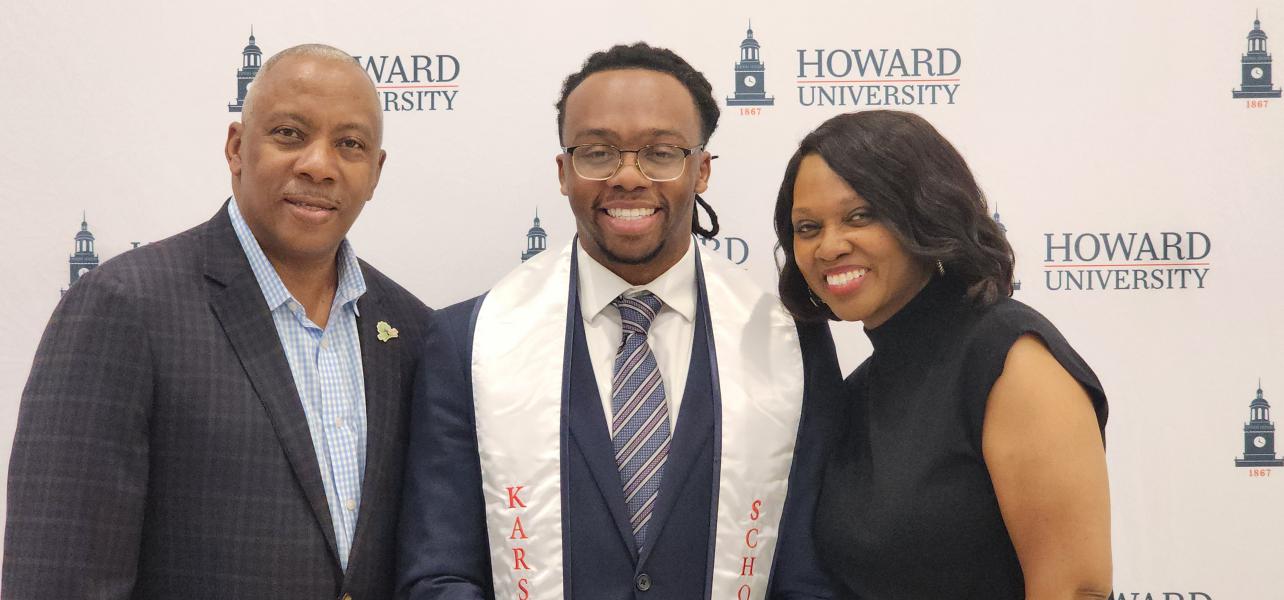
Myles with his proud Mom and Dad, Tracy and Calvin, at his graduation from Howard University in the Spring
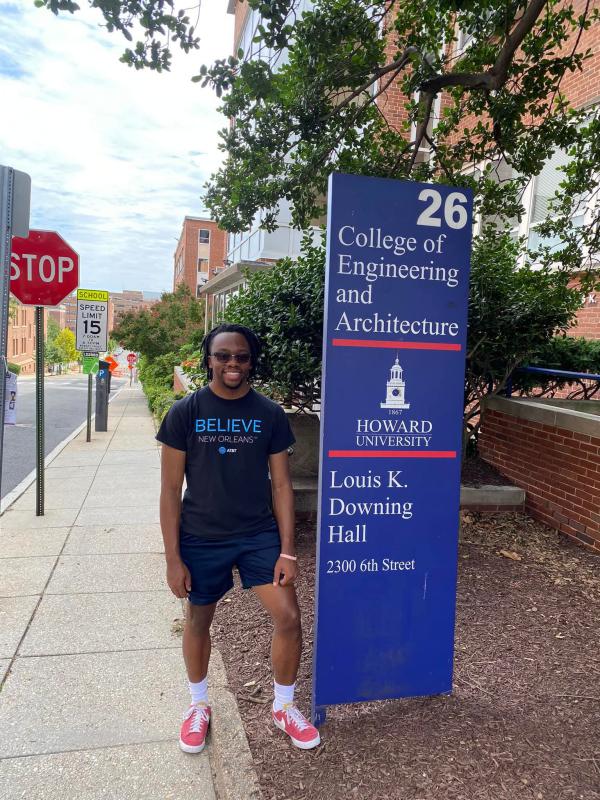
As a college student, Myles Mackie spent a summer researching the effects of free stream turbulence on low-speed airfoils at the DEVCOM Army Research Labs, another helping design a user interface at a NASA Jet Propulsion Laboratory, and yet another working with MIT experts to reduce propeller noise in electric Vertical Take-Off and Landing (eVTOL) aircraft for applications in urban areas. In May, the 22-year-old, New Orleans engineering whiz graduated with a degree in mechanical engineering from Howard University.
Now, it’s game on!
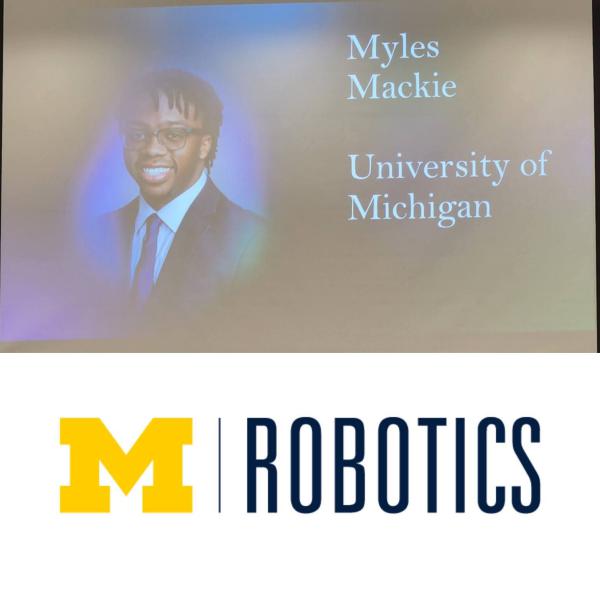
This summer, Myles is at Aerospace Corporation, a leading architect for the nation’s space programs, working on projects so vital to national security that he can only say his efforts involve the thrust stage that boosts rockets into outer orbit. Once this summer job ends, Myles is off to the University of Michigan to begin work on his PhD in robotics.
It’s an extraordinary journey for a young African American, one who has excelled since birth, particularly in math and science, leaving his parents and teachers little doubt that he has the special abilities and aptitude to make a mark in our society. Myles has remarkable gifts, yet his success is also made possible by the nurturing love and support from his parents, Tracy and Calvin Mackie, who are actively engaged in his growth and education. Their role in his journey is a testament to the importance of family and community support in nurturing talent.
Educators lament about the “Lost Einsteins,” thousands of young, gifted Black and Brown children who demonstrate the ability to be inventors and creators. However, they are never nurtured at home and school, and their potential is never fully realized. Myles Mackie exemplifies what can happen when children’s intellect and talents are recognized, cultivated, and celebrated. It can transform students of any color, instilling self-confidence that allows them to explore and succeed, propelling young men and women along pathways to greatness.
“Myles is authentic,” exclaims Tracy, his mother. “He tells it like it is. Whatever he puts his mind to, you know he’s going to do it. He sets goals. Since he was little, he has achieved his goals by any means necessary. He is very disciplined when it comes to accomplishing his goals. And Myles is very passionate about everything he does.”
Myles’s passion for learning and his determination to achieve his goals, evident from a young age, have been key factors in his success.
Tracy, who holds a pharmacy degree from Xavier University and excels in math, recalls that Myles has always had a fascination with numbers, even from a very young age.
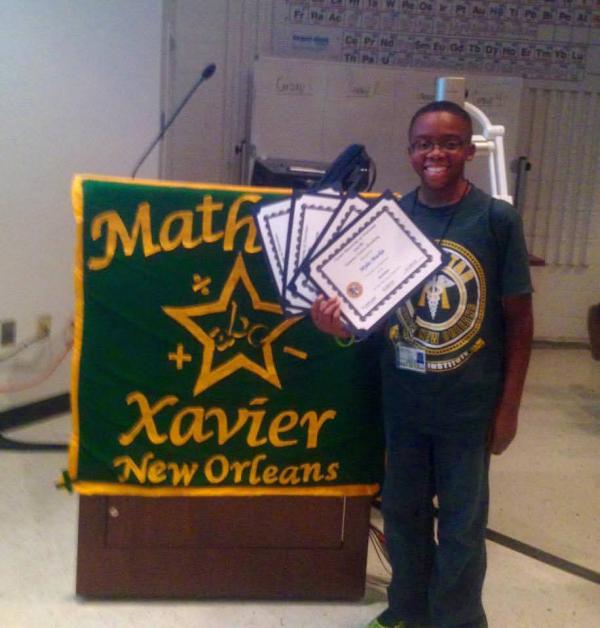
“But he didn’t count like regular kids,” she says. “He did the basics, but he would count backward. 10, 9, 8, 7….And when asked to count by 3’s – 3,6,9. He would count by 300s – 300, 600, 900… these kinds of things started happening when he was two years old. But he didn’t talk much at home, so I went to see his teacher and asked about him. She said that he talks in the classroom and is very smart. So, he wasn’t talking much to me. Lol.”
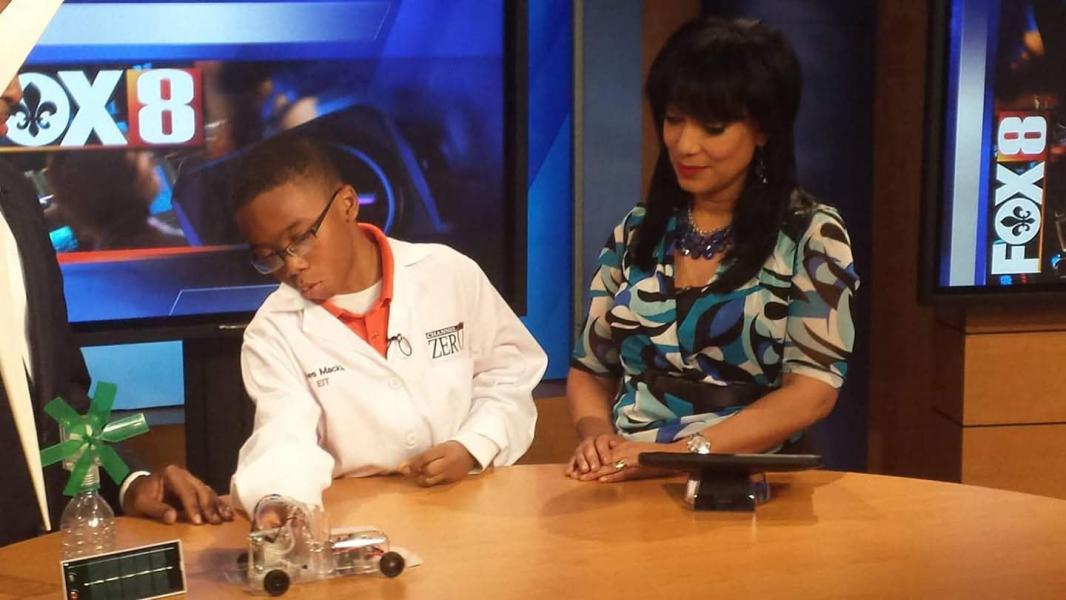
When Myles was eight years old, his life and that of his whole family changed. At the time, his father, Dr. Calvin Mackie, was a professor of mechanical engineering at Tulane University, the first African American to hold a tenured position in the School of Engineering. Myles was always interested in science, but one day he suddenly told his parents he didn’t like it anymore because his science teacher was boring and spent the class talking to the bulletin board.
Dr. Mackie swung into action.
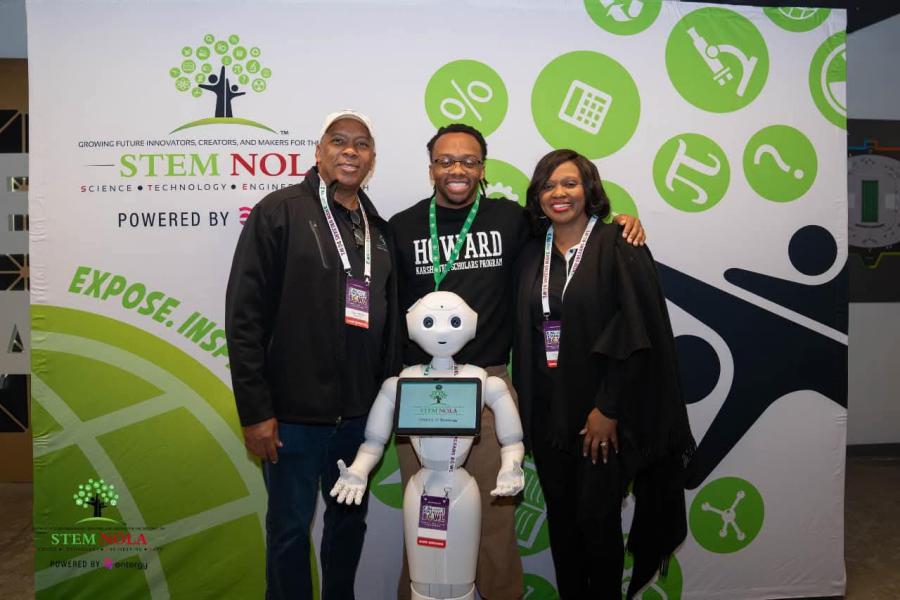
Each weekend, he would gather Myles and his younger brother, Mason, and they would do Science, Technology, Engineering, and Math (STEM) experiments in their garage. Soon, neighborhood kids would join them. Months later, with his wife, Tracy, Dr. Mackie launched STEM NOLA, an education initiative that teaches STEM learning to children in grades K-12, and most importantly, does it in their communities. Dr. Mackie recognized that hands-on STEM experience made a difference for his sons and needed to be the foundation for others learning STEM. The initiative blossomed into one of the nation’s top STEM learning initiatives. STEM NOLA continues to operate in New Orleans, while other STEM programs are located in cities around the country under the STEM Global Action (SGA) banner. Since launching in 2013, Dr. Mackie’s programs have invigorated STEM ecosystems nationwide, impacting 250,000 K-12 students, 5,150 schools, and 5,500 volunteers.
Dr. Mackie is not at all surprised by his son’s success, having witnessed the work he has put in over the years to master all the challenges he has faced. “Mackie men do what they have to do, so they can do what they want to do,” he says, reciting their family motto, in explaining that hard work pays off.
“Myles succeeds mostly because he is brilliant and works hard,” Dr. Mackie said. “But we can’t lose sight of the fact that Tracy and I created a home environment that supported him. We also introduced him to Black scholars and achievers, so that he could meet Black doctors, scientists, and engineers, and realize that he, too, could be one. Too many gifted and high-achieving Black and Brown students throughout the country are not being nurtured, and therefore, their talents and potential contributions are being wasted. We are proud that STEM Global Action is shaping other young minds.”
For Myles, it has been a lifetime of STEM.
“I was eight when we began STEM NOLA, so it almost feels like I’ve always been into this,” Myles says in an interview, while taking a break from thinking about booster rockets. “I think the first vivid memory was when my Dad ordered a chemical refinery kit that Mason and I put together. There’s still an old video that Dad has, where he walks us through each phase of the process. I remember the thrill of putting the pump in place.”
Myles also recalls another experiment. “It was a four-cylinder piston engine,” he says, noting that these experiences contributed to his desire to design and fix things. “My Dad walked us through it. Compression, spark plug expansion…That’s how you get the power to drive the piston. I was young, but I enjoyed it. I always loved learning how things worked. And so, between that and the refinery, I knew I was going to be an engineer.”
Myes decided to attend Howard University because of his desire to grow in an environment known for fostering Black excellence. He was in the Karsh Stem Scholars Program, “a PhD pathway program that was explicitly created to position him and other youths to be surrounded by other aspiring Black STEM professionals. He plans to follow his passions by making things that will help people. “I want to continue being an inspiration for my family, friends, and community and prove that anything is possible,” he says, adding that outside of school and work, he enjoys creating and consuming art and music and playing a variety of sports for fun.
Long ago, Tracy and Calvin discovered that raising a genius child can have its challenges.
The math prodigy was never particularly fond of English classes. In the 4th grade, he was required to read a book, Percy Jackson: The Lightning Thief, a fantasy novel he found long and boring. He didn’t read it. “A day before the test, I asked if he had read the book. ‘No, I’m not reading it. The book doesn’t make sense, and I’m not reading it,’ he told me. English was a thing. That’s the only subject the boy ever got a B in. He took the test and got a C on it. So, Myles passed the test and never read the book. Concerned that his dislike of English might hold him back, I talked to his English teacher. She said, ‘Myles writes beautifully, it’s his mindset. He sits back there in class, but I know what he was doing, reading something about math and science. He loves those subjects but doesn’t care about this class.’ Calvin and I spoke with him, trying to make him understand that sometimes you have to do things you don’t want to do to achieve a greater purpose. He didn’t do that anymore.”
Other times, his parents were his greatest advocates.
“I still have a paper from the first grade,” Tracy says. “He got a 95 on a math test. I looked at the paper, and the teacher had marked a problem wrong that looked right. I always reviewed his tests, and when something was wrong, I made sure he understood why. I had a conference with the teacher and asked why she had marked the answer wrong. She said the manual designates a different answer as being right. I brought the blocks over to demonstrate that his answer was also right. Finally, she agreed, but she said, ‘Well, he still got an A.’ I said, ‘Listen, he got an A, but Myles is very analytical, so if you mark this wrong and you’re telling him it’s wrong, he’s going to go through life believing his thinking is incorrect. His answer was based on what he saw, and it was on a higher level than the manual. So you need to let him know his answer was also right.”
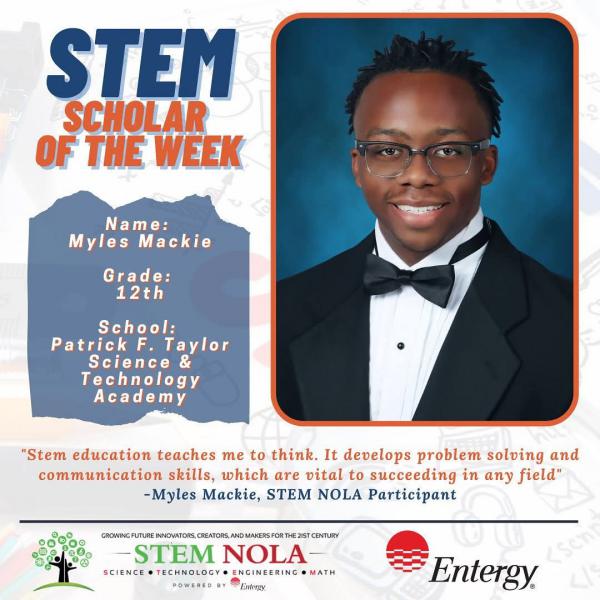
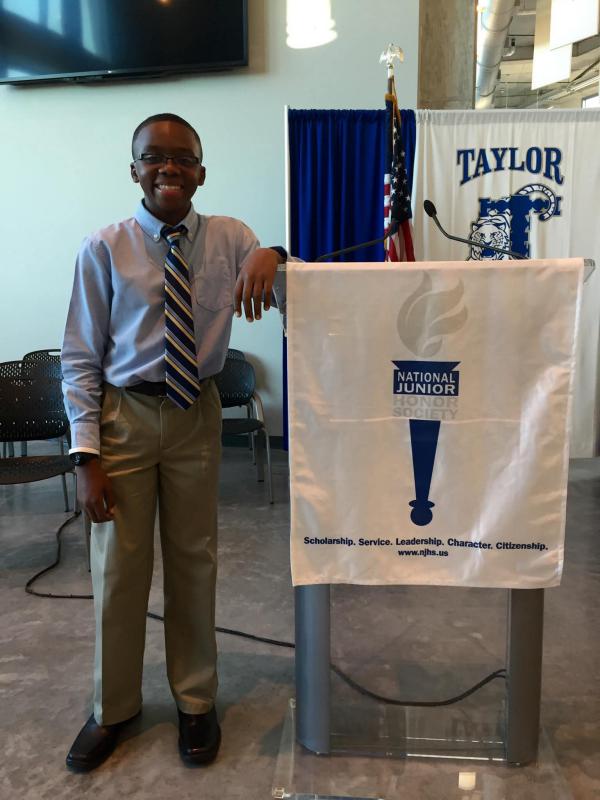
For high school, Myles attended the Patrick F. Taylor Science & Technology Academy, a top-ranked high school in Louisiana and one of the best in the country. However, for eighth and ninth graders, the curriculum was arranged so that the highest math class they could reach before graduating was Calculus I. Myles was ready for more. Tracy met with the school administrators, wrote letters, and appeared before the school board to enable Myles to adjust his schedule so he could take advanced math classes before graduating. He was approved to drop AP Human Geography to take Trigonometry/College Algebra so that he could take AP Calculus in his junior year and have room for Dual Enrollment Calculus II and III in his senior year.
“Other parents must know to advocate for their children,” Tracy says. “He wanted to be an engineer, and we worked to ensure he had a path to reach his goal.”
She has a simple message for other parents.
“You have to know their children,” Tracy proclaims. “And if you have multiple children, you have to really know them because it’s not a one-stop shop. Both of my boys excelled, but there were some differences between them that I had to understand. They are different, but both are high achievers. Even at the best schools, you must advocate for your children. You have to be in tune with them and what’s happening in school and around them. If you’re not paying attention to what they’re doing, they can be left behind.”
Needless to say, Tracy’s and Calvin’s approach has worked. As he enters his doctoral program, Myles has a plan in place.
“Part of how I decided the direction I want to go is determining what has the broadest range of impact on people’s lives,” Myles says. “I picked systems and controls. The whole aspect of systems and controls is that you are modeling how things work. Regardless of what I’m engineering, whether it’s spacecraft mechanical systems, jet engines, or something else, I want it to have a positive impact on communities. I want to use technology and my engineering skills to enhance the quality of life for families and communities.”
Myles Mackie: An Amazing Achiever from Birth to Brilliant, Young Engineer